FrankenShip
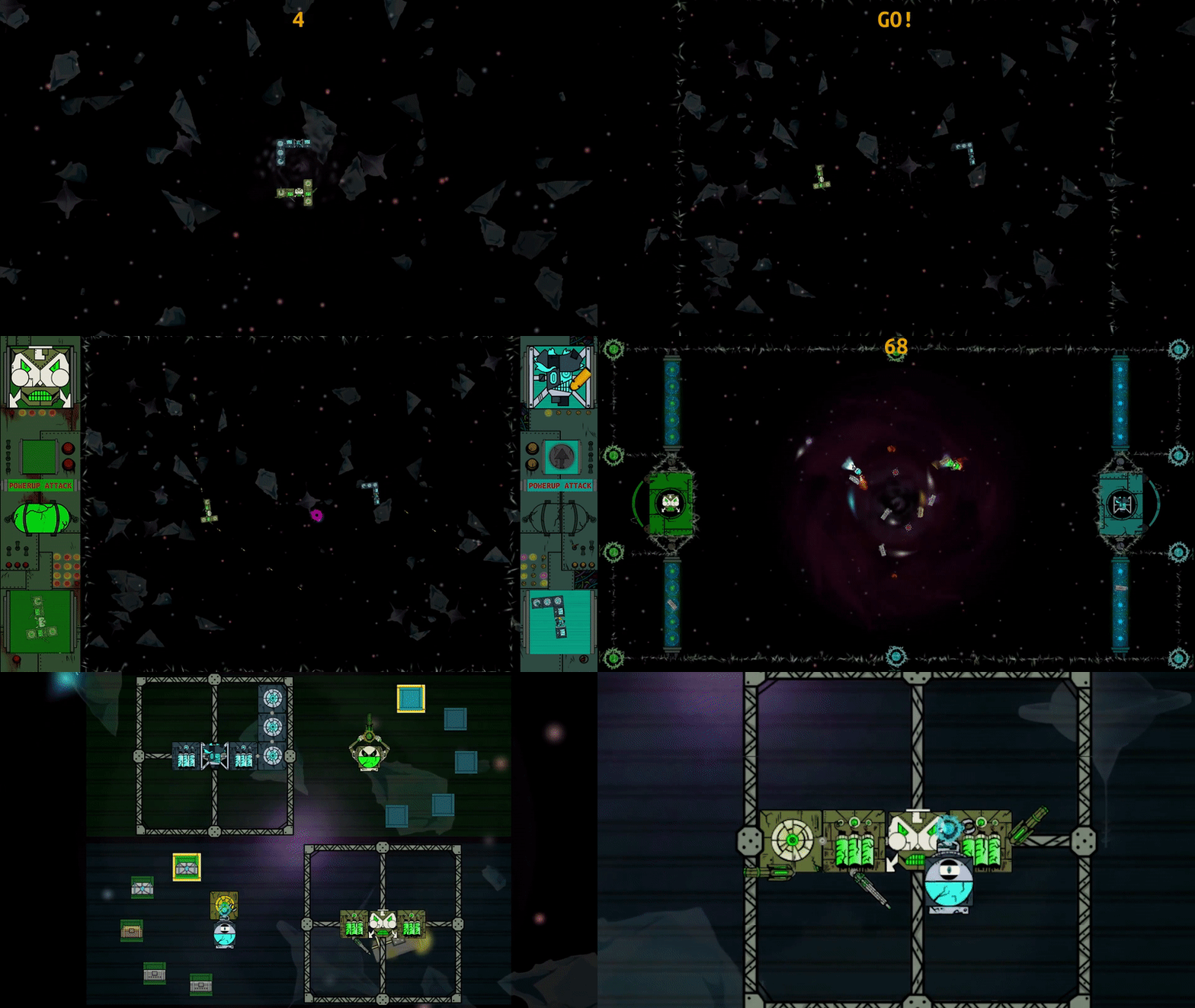
A fast-paced space shooter where two players fight to the finish with ships built by their opponents. Embrace chaos in all out ballistic warfare and use different building strategies to sabotage your sworn enemy.
April 2016 — PC — Unity
Frankenship is one of my most prominent games, the creation of which offered me the chance to gain valuable experience coordinating many facets of development within a project. Leading a team of programmers, I assigned tasks and deadlines while prioritizing features for each development cycle. I also worked with the producer to translate the vision of the game into concrete, scriptable features. This collaboration within a dedicated team was a fantastic experience, showing me the importance of a shared understanding of a project’s direction.
Features
Programmed modular structure of
user-generated ships
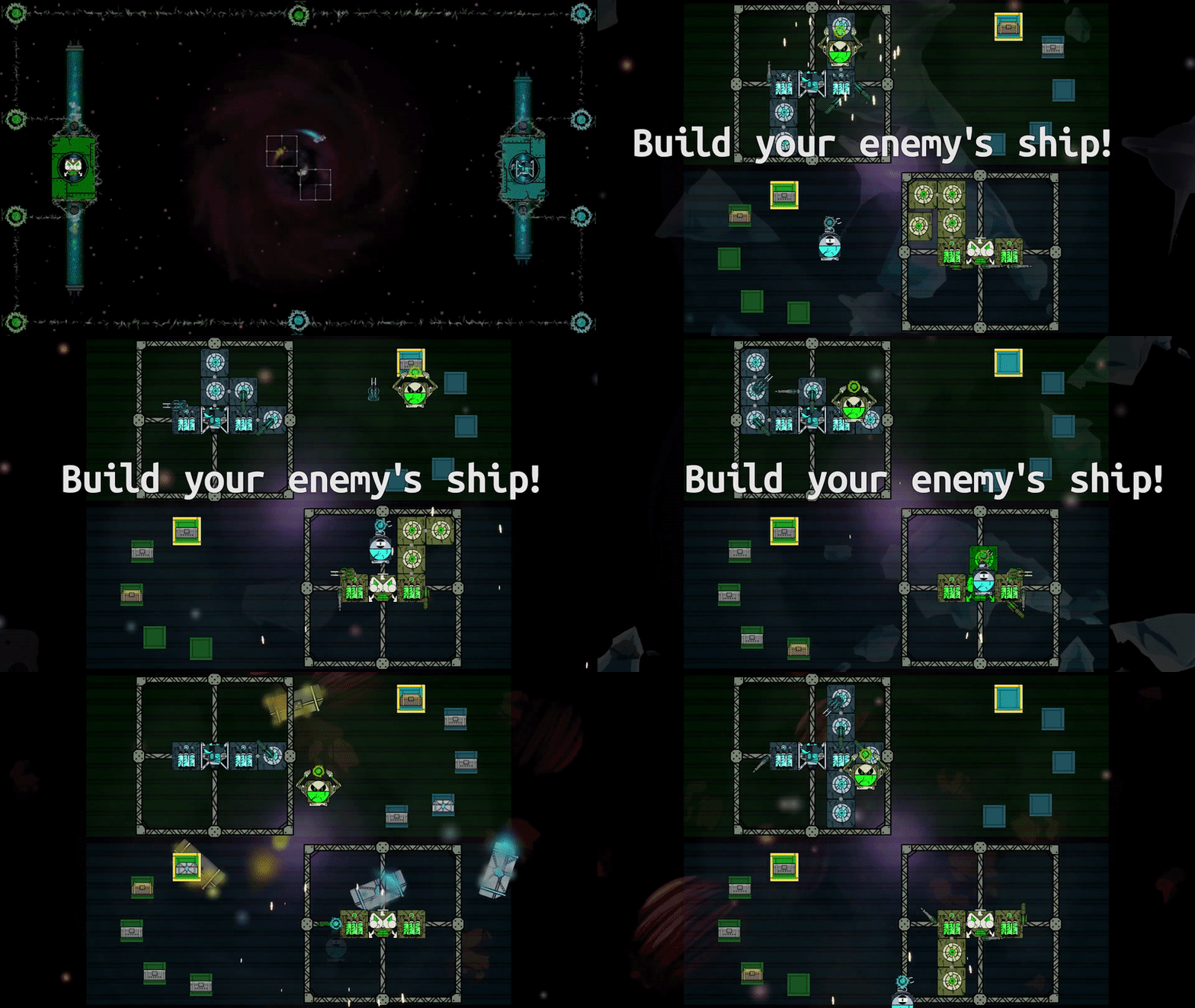
Within my role on the team, I was responsible to be the architect behind the construction feature of the modular ships done by the players. I implemented a hitching system that allowed the attachment of pieces to each other, creating a hierarchical structure and checking for overlapping weapons or thrusters. Each ship piece is weighted by either its ability to damage the opponent, or its protective ability of the ship’s critical ‘face’ core. This feature of malleability allowed for a play space that includes endless construction possibilities and variability of play style. This also allowed players agency to sabotage each other with chaotic movement schemes and irregular weapon configurations.

DESIGNED AND IMPLEMENTED
COLLECTION PHASE LAYOUT
We designed the level symmetrically with a mothership on either side having 5 gravity spots above and below, and the black hole with crates in the middle, giving no advantage to either player. I personally had a strong hand in designing the level with dynamic physics gameplay in mind, implementing a “shock” on the level boundaries that applied an impulsive force to crates and players when touched. The inclusion of creating space behind the gravity spots is another key feature that allows players to overshoot their crates, requiring more precise and skill-based shooting.
Admittedly, this design had user experience issues with new players, attempting to shoot crates into the mothership in the middle and thinking the space behind the gravity spots as the area to place their crates. We attempted to highlight the visual aspect of the gravity spots to emphasize their role in the game, but the overall design was not intuitive to players.
In hindsight, I would redesign the structure of the gravity spots with their placement in front of either mothership, spanning the vertical space of the screen. This would allow players to easily capture crates in the double digits, creating more possibilities for complex ship designs and high level strategies. By lowering the barrier to entry for collecting pieces in relation to our intricate control scheme, I could have created a more fun experience in the latter phases where our game was unique and interesting.
BALANCED ENVIRONMENT AND PHYSICS FOR CHAOTIC GAME PLAY
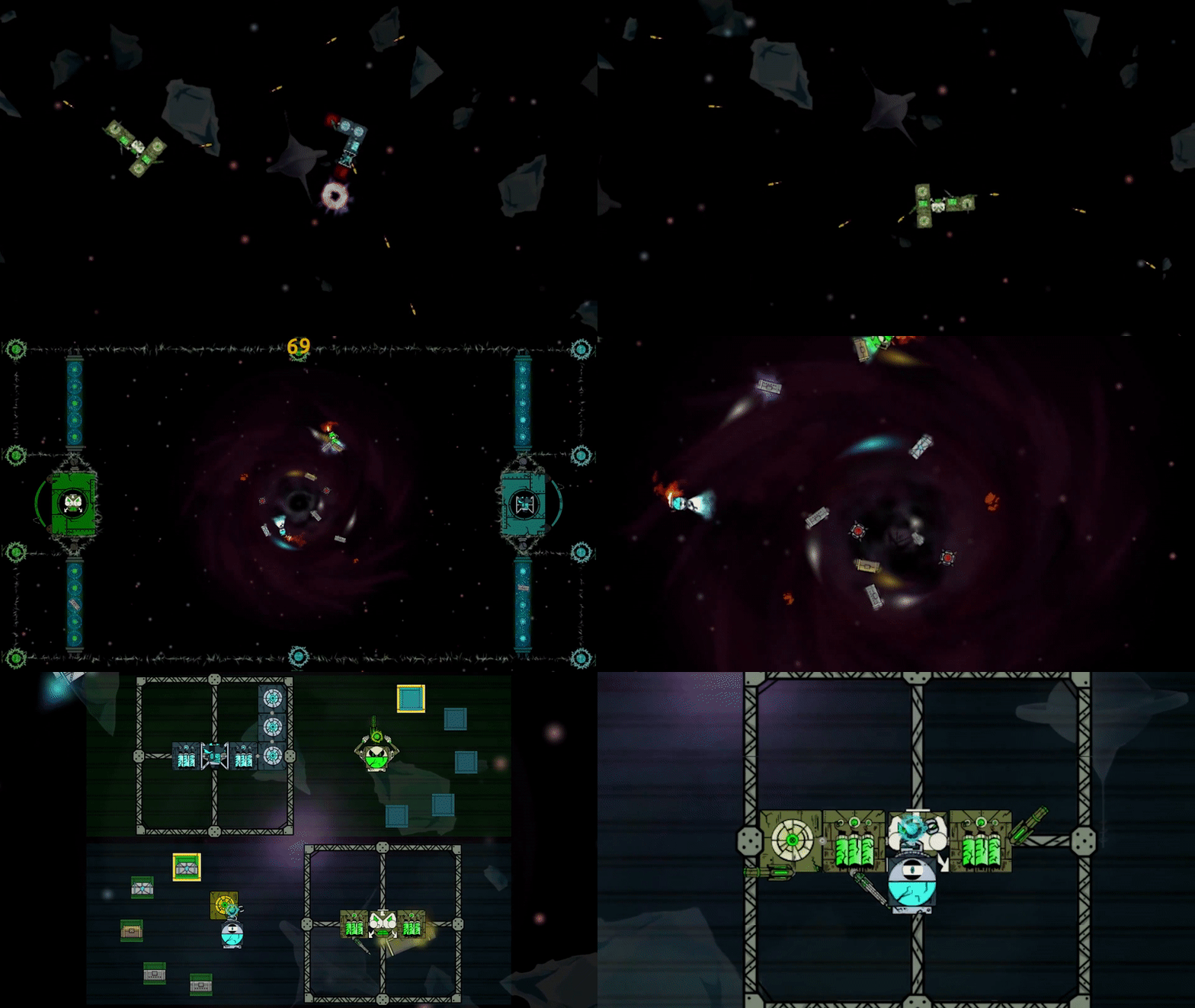
After creating the black hole and mother ships’ gravity zones, I played a major part in fine-tuning and balancing all of their forces. I also tweaked the player ship movement and tiered crate weights. This opportunity allowed me to dive into the world of polishing values in order to create a dynamic, predictable, yet complex system. We also recorded analytics on crates collected, providing data and feedback to direct design iterations on ship assemblies at a high level.

